Demo, fictional company
Lakeshore Precision Machining.
A job-shop ERP for a machine shop that does not exist. Every customer, part number, person and dollar on these screens is generated. The software is real: Blazor Server, .NET 9, SQL Server or SQLite, 158 tests, source you can read.
What it is
The system a 60-person shop would have instead of a spreadsheet for quotes, a whiteboard for the floor, and memory for what shipped.
Quotes with the margin visible while you type. Jobs with routings. A board you drag cards across. A clock-on screen built for a gloved hand on a wall terminal. Stock with what is promised and what is free. Shipping that raises the invoice. Reports that show which jobs lose money. An audit trail that says who changed what.
This is the shape of what I build for manufacturers. Yours would have your work centres, your part numbers and the things your current system cannot do.
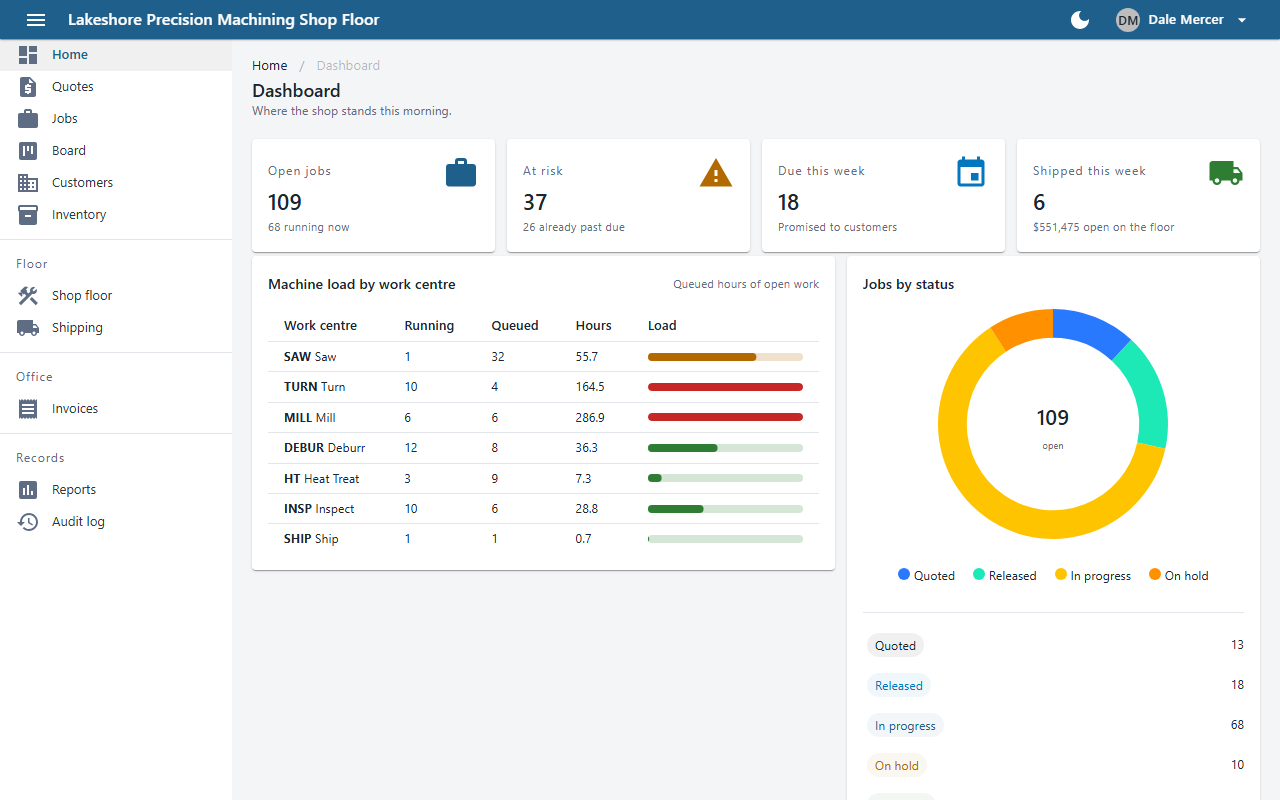
Dashboard
What the shop looks like this morning: open jobs, what is at risk, what is due and what shipped this week, and the load queued at every work centre.
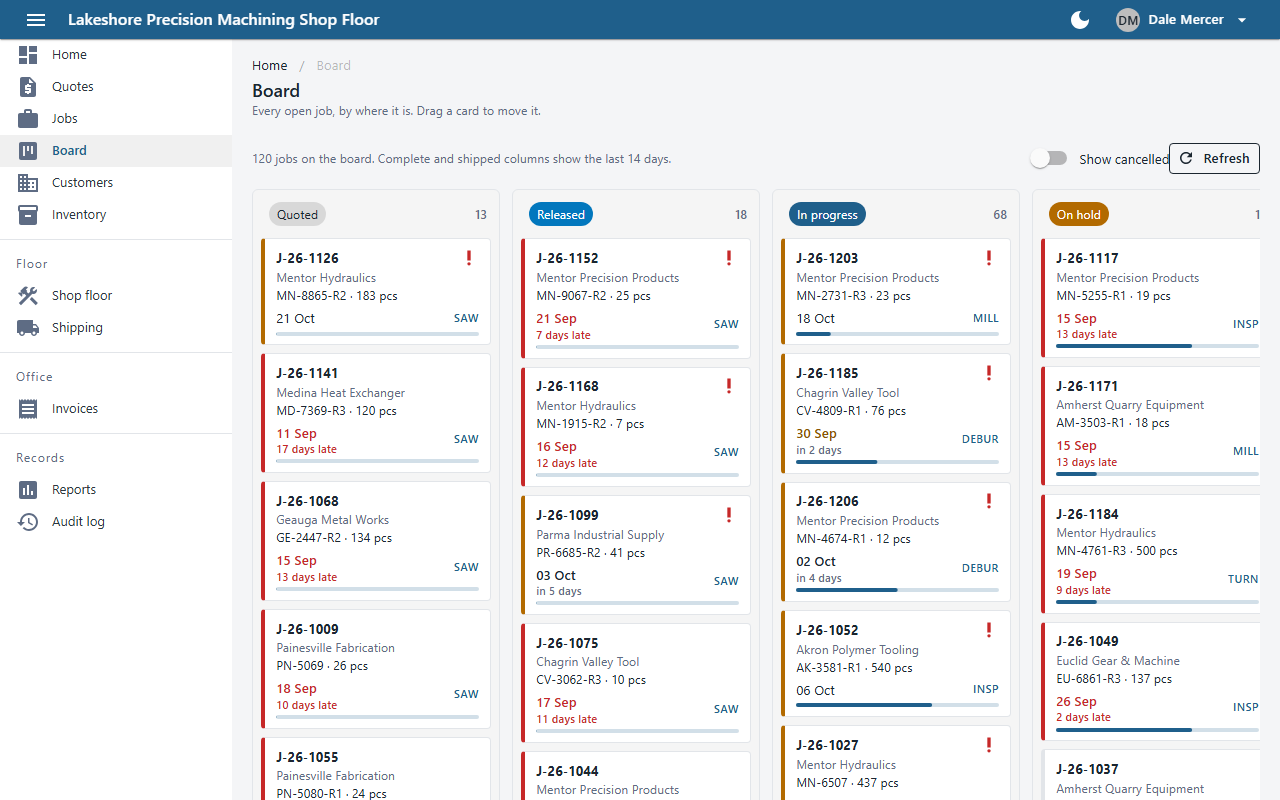
Board
Every open job by where it is. Drag a card to move it. A move the routing does not support snaps back and says why.
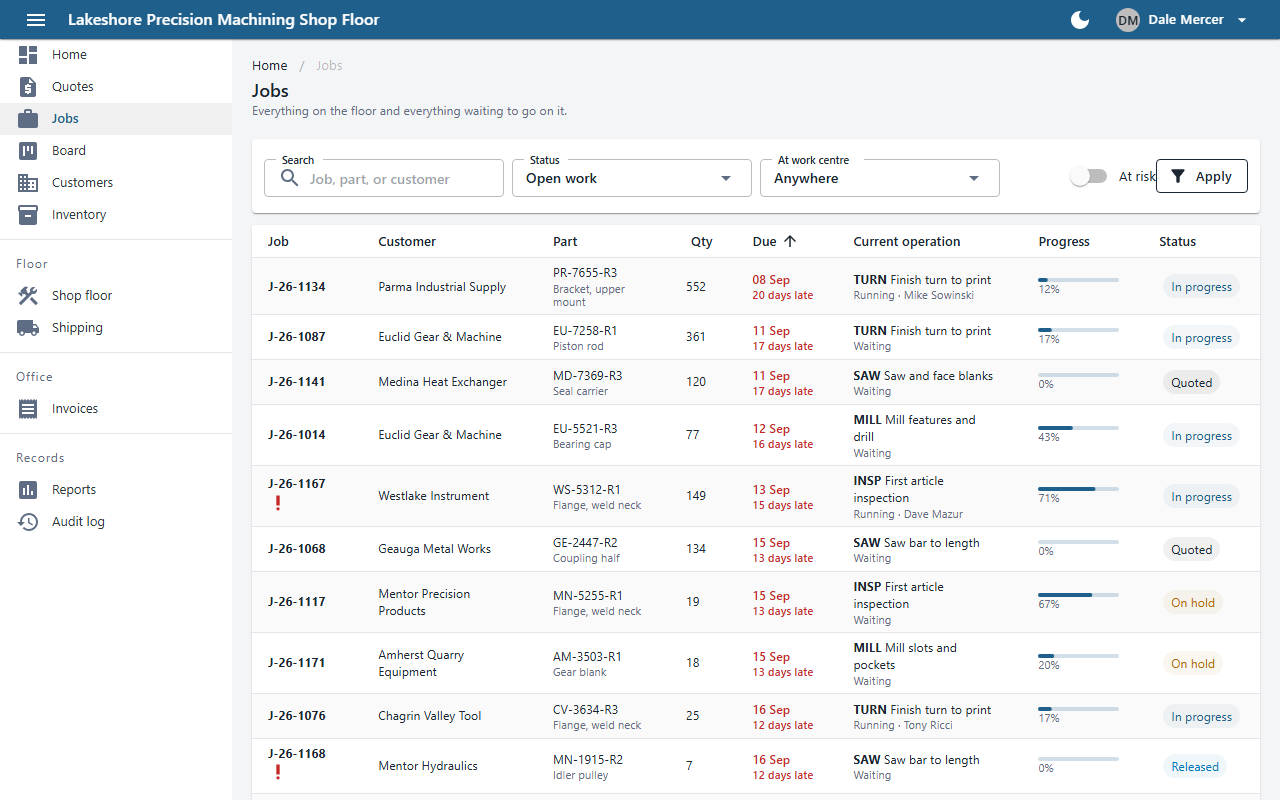
Jobs
Open work, sorted by due date, with the current operation and who is running it. Late jobs say so in words, not only colour.
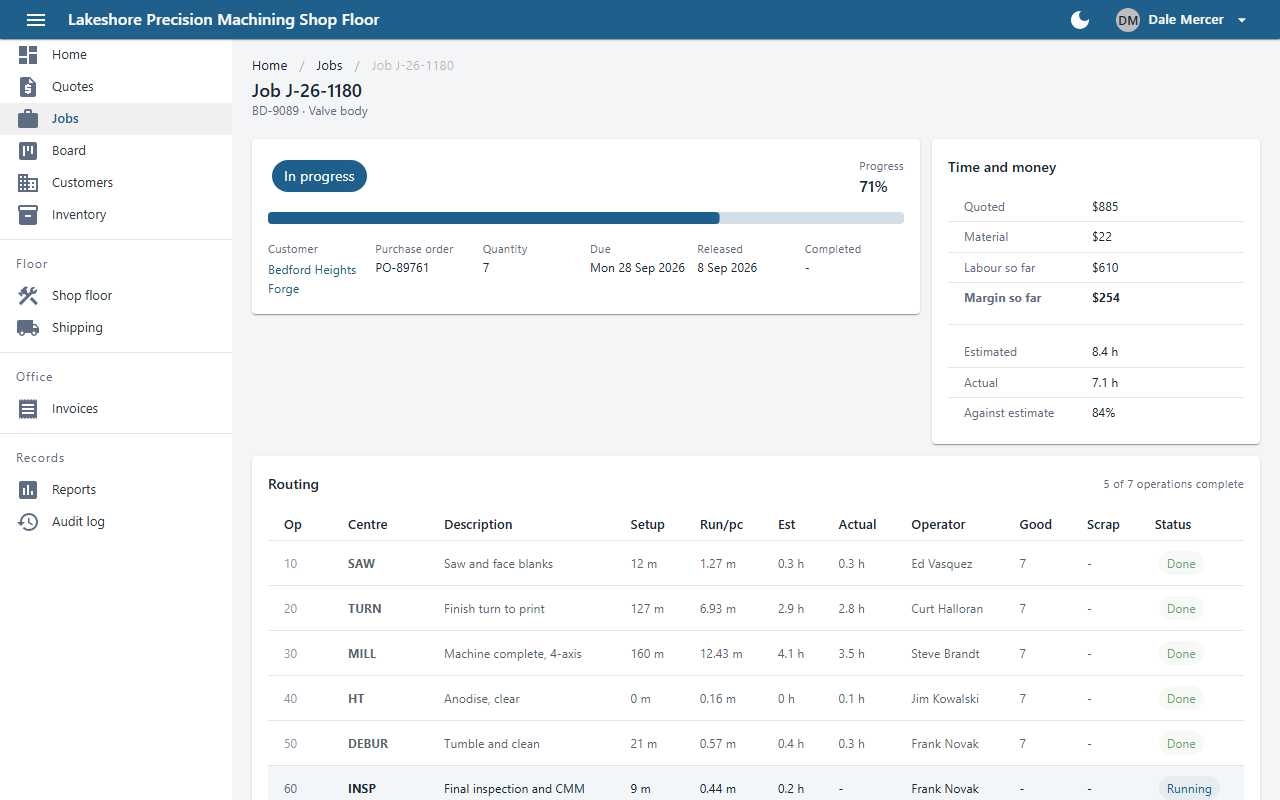
Job detail
The screen that sells it. Quoted against actual, the margin so far, every operation with who ran it and how long it took, the material promised to it and what has shipped.
Quotes
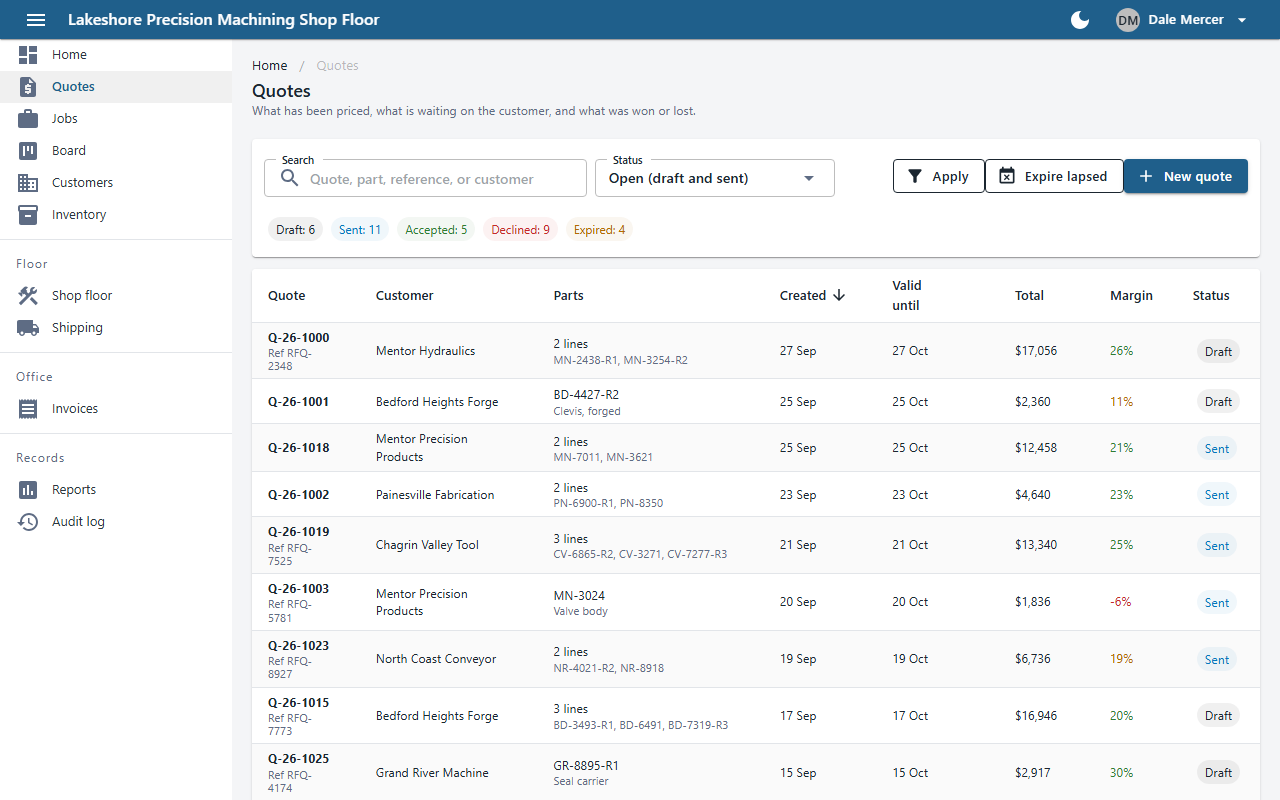
The pipeline by status. Margin on every quote, red when it is underwater. Accept one and every line becomes a released job with a routing.
Quote detail
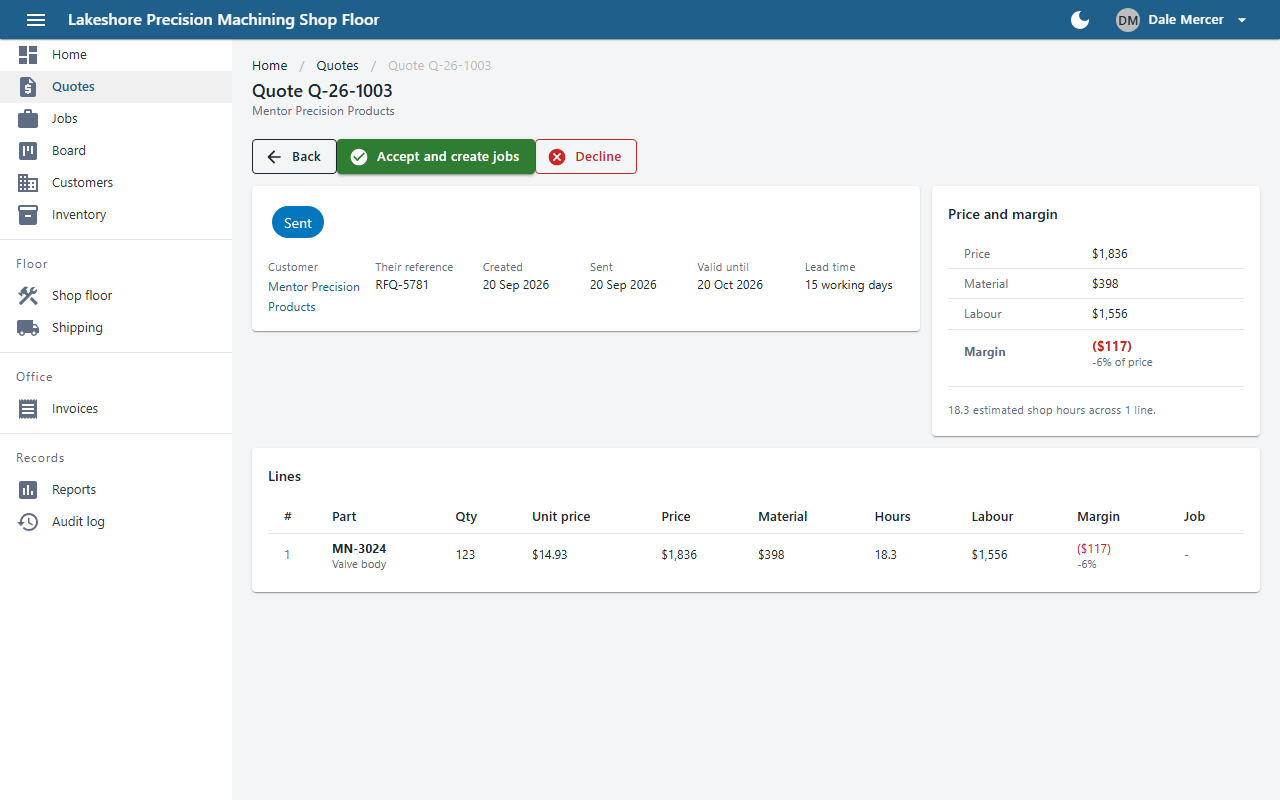
Price, material, labour and margin per line. A quote that has gone to the customer is frozen; a revised price is a new quote.
Shop floor
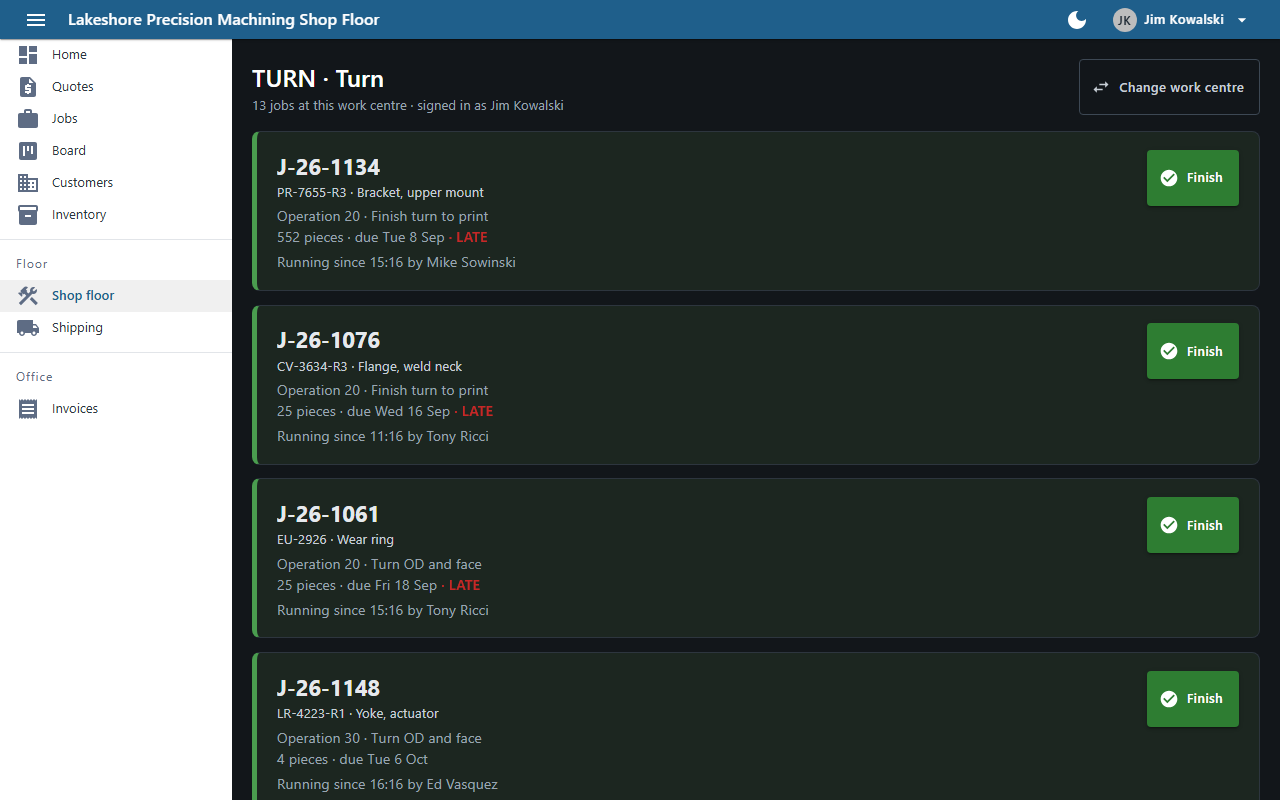
The operator's screen. Dark, big targets, three things on it. Pick a work centre, start the job, finish it, type the good and scrapped counts.
Inventory
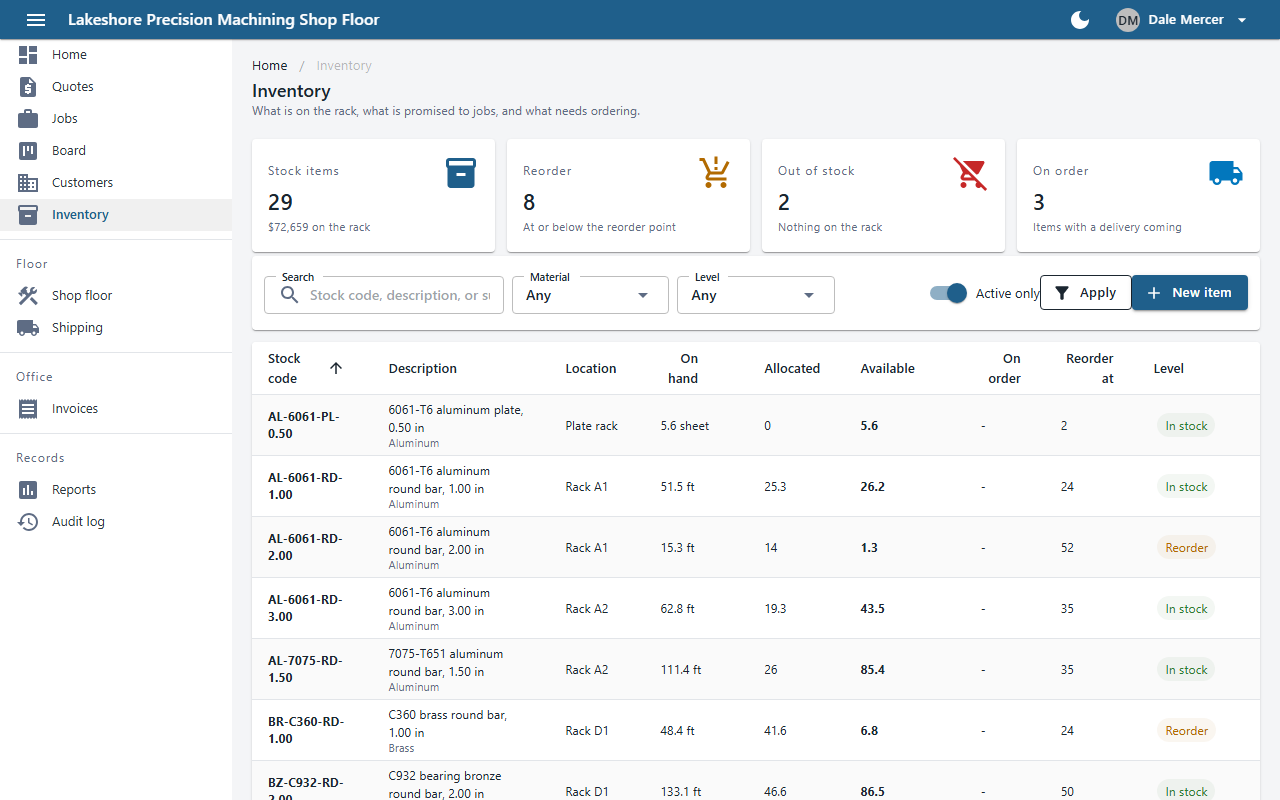
The rack: what is on hand, what is promised to jobs, what is actually free. Reorder follows free stock, so a full rack with four jobs drawing on it reads as reorder.
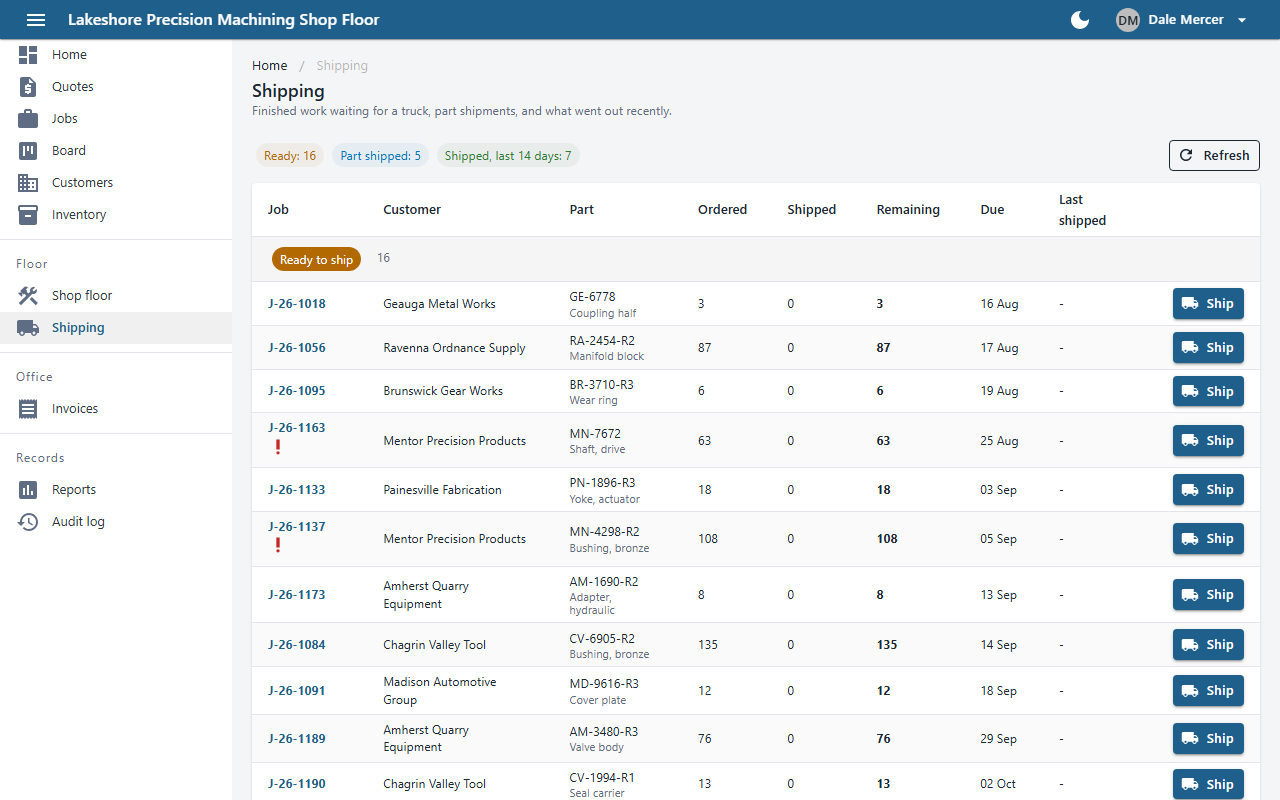
Shipping
The dock. Finished work waiting for a truck, part shipments, what went out recently. Shipping raises the draft invoice in the same step.
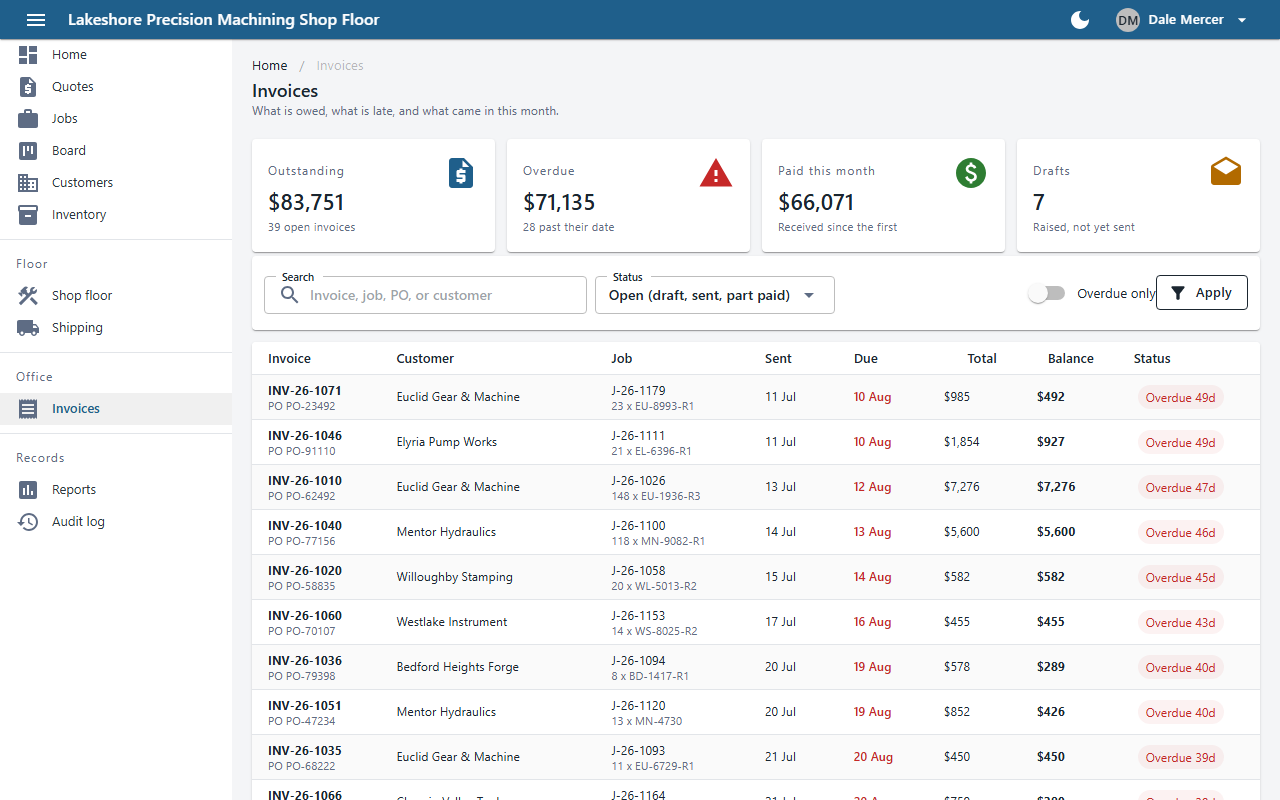
Invoices
What is owed, what is overdue, what came in this month. Overdue is worked out from the due date, so it is right the morning it becomes true.
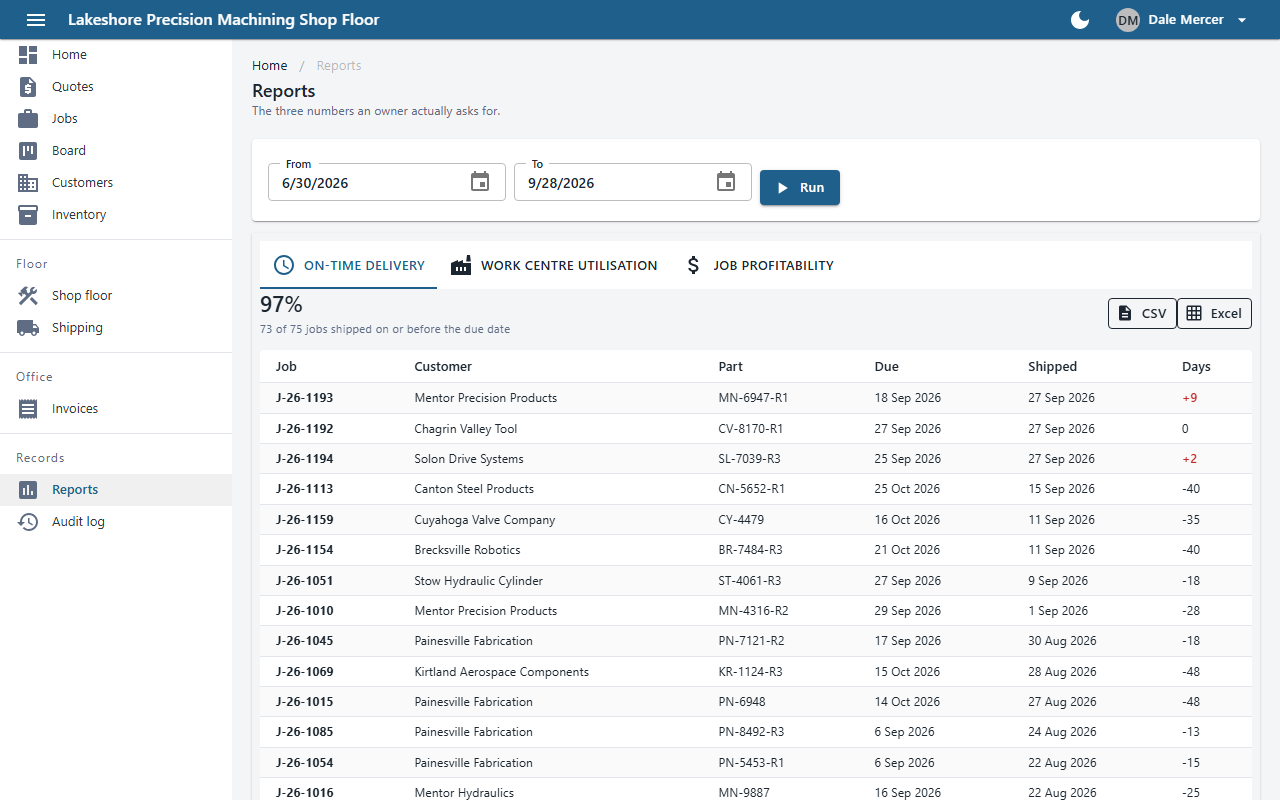
Reports
On-time delivery, work centre utilisation, job profitability. Export any of them to Excel and get a real workbook.
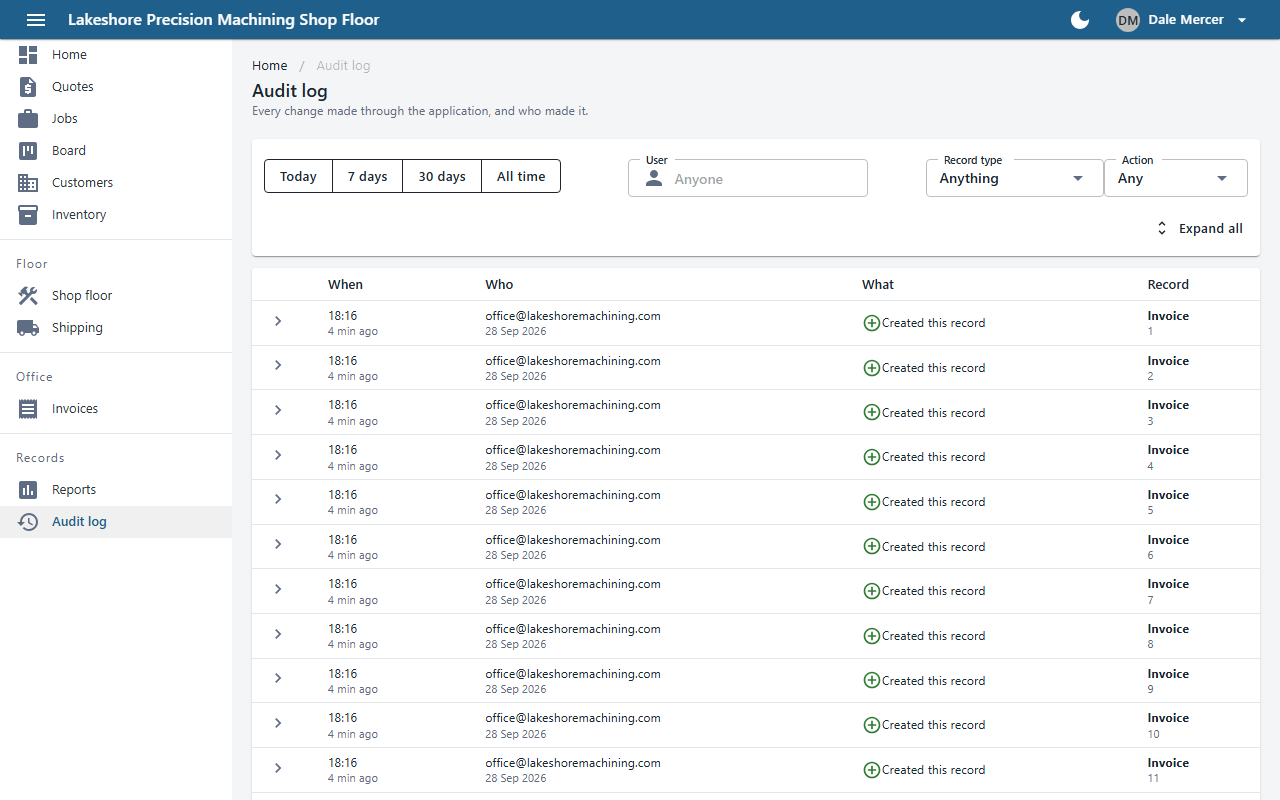
Audit log
Every change made through the application, who made it, and the before and after values. Nobody has to ask IT who changed the due date.